Reading Lists
How to Read More Without Quitting Your Day Job: 10 Realistic Habits
Most people who say they would love to read more are not short of enthusiasm. They are short of a clear forty-five minutes with a quiet room, a pot of tea and a phone that behaves itself. That window rarely turns up, and waiting for it is why the pile beside the bed keeps growing while the reading log stays empty.
Reading more is less about finding extra hours than about using the ones you already have a little differently: ten minutes on a platform, twenty over lunch, half an hour before the light goes off. None of that feels like much on its own. Stacked across a week, it is a novel.
Stop waiting for the perfect reading conditions
There is a version of reading that lives in fantasy: a whole Sunday afternoon, no chores, no messages, nobody asking what is for dinner. It happens occasionally. It cannot be the plan.
Real reading happens in fragments. Eight pages while the kettle boils. A chapter while you wait for a friend who is running late. If you accept that a book can be read in pieces, you stop needing perfect conditions and start using ordinary ones. For one week, try reading a page instead of reaching for your phone whenever a gap of five minutes appears.
Turn the commute into a reading slot
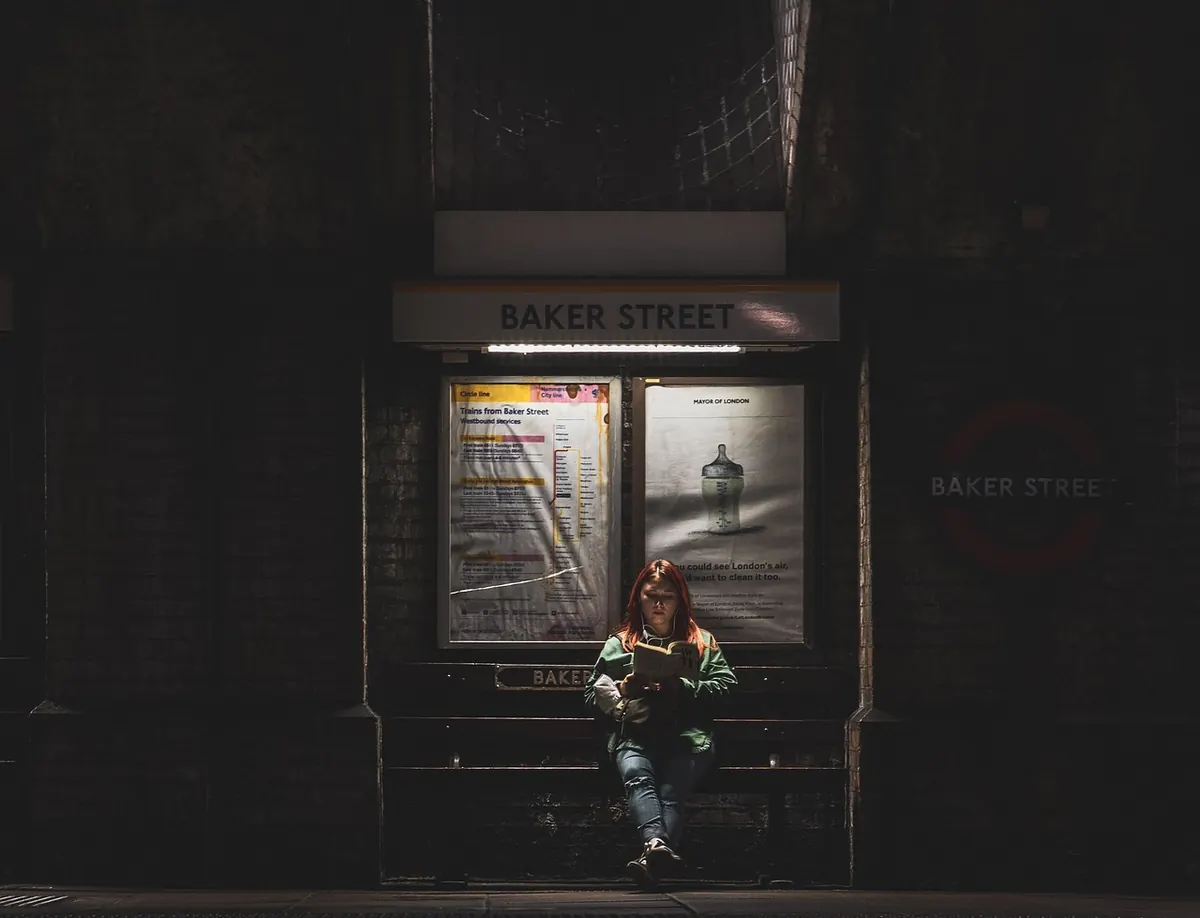
For many people the commute is the most reliable reading time of the day. It is already blocked out, it happens whether you feel like it or not, and nobody expects you to answer email during it.
On trains and buses
Keep the book in the outer pocket of your bag rather than buried under a laptop and a gym kit, and put the phone in a zipped compartment so it has to be retrieved. Read standing up if that is what the carriage offers; it is easier than it sounds. Commutes reward short chapters and a strong forward pull — crime, essays, memoir — so save the dense history for the sofa, where you need not re-read the same paragraph at every station.
In the car
That is listening time. Audiobooks work well on familiar routes and long motorway stretches, though a book that demands your whole attention is better saved for the kitchen while you cook.
Take your lunch break back
Lunch is the slot most people give away. Half of it goes on finishing something quick; the rest disappears into a screen.
Decide in advance which sort of break you are having. If it is a reading break, eat somewhere other than your desk — a canteen corner, a park bench, the front seat of the car — and take the book out before you take out your phone. Twenty-five minutes of actual reading is around fifteen pages, which over a working week is most of a short novel. It also helps to name the time: "I am reading until half past" is easier to defend than a vague intention to take a break.
Put books where you already sit
Convenience beats willpower. If a book is within arm's reach you will read it; if it is upstairs and you are downstairs, you will scroll instead. Distribute them deliberately:
- One in the bag you take out of the house, always.
- One on the arm of the sofa, where you land in the evening.
- One beside the bed, the paper kind, so a dead battery is never an excuse.
- One in the kitchen for the minutes spent waiting for pasta or a kettle.
- An e-reader app on the phone's home screen, so the book is one tap away rather than four.
A week without social apps on the first screen of your phone is a useful experiment. The point is to make reading the path of least resistance rather than the reward at the end of a long list of chores.
Widen what counts as reading
The surest way to read less is to decide that only serious novels count. That rule turns reading into homework.
Essays, short stories, poetry and novellas are built for interrupted days. A story is a complete thing you can finish on one bus journey, which is far more satisfying than four pages of a 600-page novel with the thread already lost. Listening counts too: forty minutes of walking, cooking or washing up is forty minutes of a book you would otherwise never touch, and plenty of readers who are certain they are not audiobook people change their minds after one long walk. Re-reading counts as well. Not every hour has to be spent on something new.
Give yourself permission to abandon
A book you dread is a tax on every other book. If you are eighty pages in and still checking how many are left, put it down. The fifty-page rule is arbitrary but useful: give a book a fair go, then decide without guilt.
Keeping two or three books going at once helps — one for the commute, one for bedtime, one for the kitchen. It sounds chaotic and is in fact forgiving: there is always something that suits the mood you are in.
If you avoid reading because of headaches, blurry print or tired eyes, raise it with an optician rather than pushing through. Comfortable reading is easier reading.
Tonight, not next January
Pick one habit from this list, not five. The book in the bag, the phone in the drawer, the lunch break spent on a bench. Do it tonight, and again tomorrow, and keep it small enough that a busy Tuesday cannot knock it over. A reading life is not built from grand resolutions. It is built from ten quiet minutes that you decided, in advance, belonged to a book.
Photo: TheOtherKev / Pixabay
Related Articles